Serving Alhambra, CA and surrounding areas. (626) 682-0127
A deteriorating parking lot creates liability, drives away customers, and costs more every season you wait. We pave commercial lots from the ground up - proper base, correct drainage, and clean asphalt that holds up to daily traffic in the San Gabriel Valley.
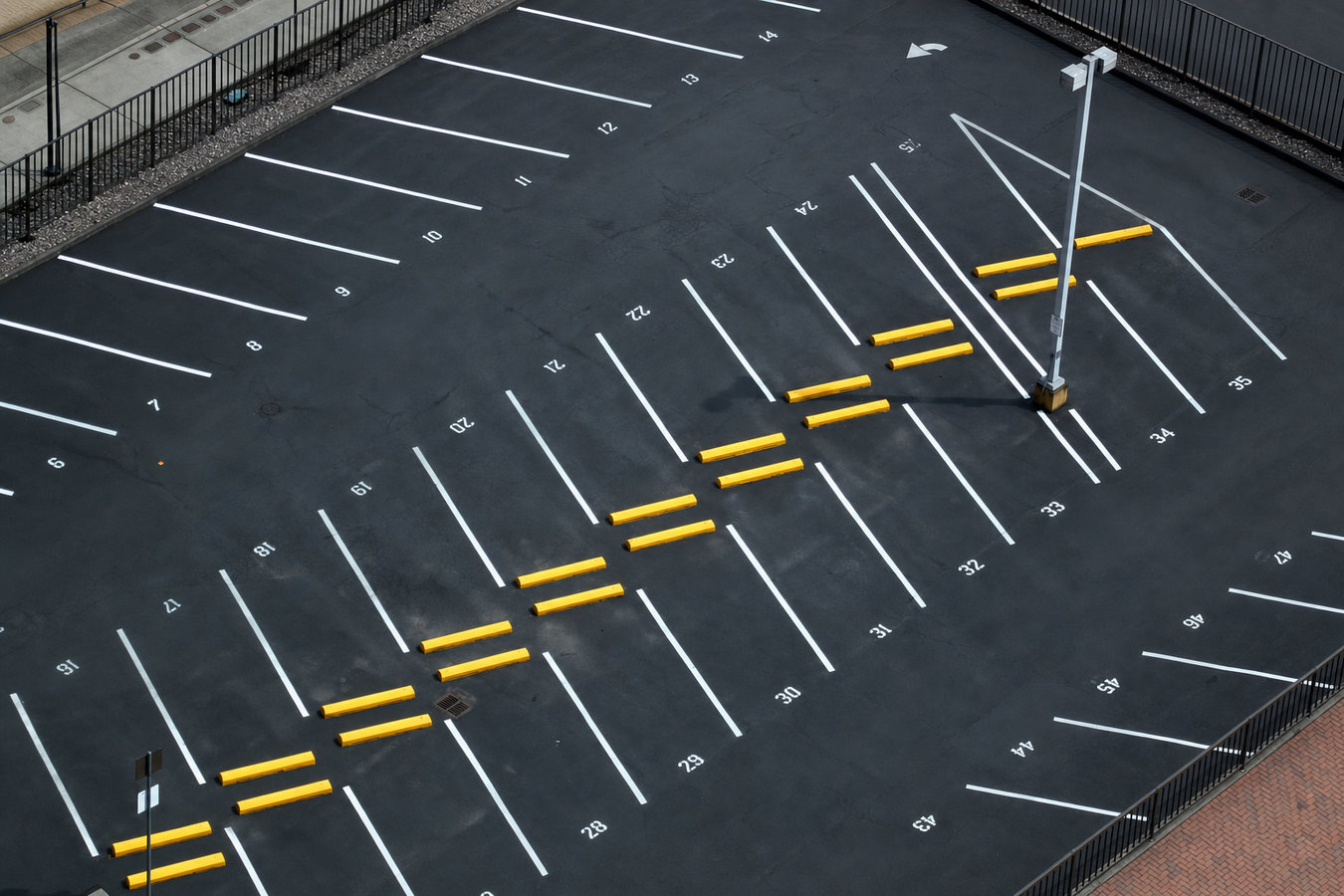
Parking lot paving in Alhambra means removing the old surface, grading the base so water drains away properly, and laying hot-mix asphalt in one or more layers. Most small-to-medium commercial lots can be paved in one to three days - though the timeline depends on how much demolition and base repair is needed before new asphalt goes down.
The part that most property owners never see is also the most important: the base. A properly graded and compacted gravel base prevents the surface from cracking or sinking over time, especially in Alhambra where alluvial soils can shift after wet winters or dry-season shrinkage. A lot built without a solid foundation is set up for repeated failure regardless of how good the top layer looks when the crew leaves. If your lot has deteriorated to the point where widespread cracking or drainage problems signal base failure, our commercial asphalt paving service covers the full scope of larger commercial projects.
A clean, freshly paved lot also works in your favor commercially. In Alhambra's competitive business corridors along Valley Boulevard and Main Street, a well-maintained lot signals that a property is cared for - and that matters when customers are choosing where to shop, lease, or do business.
When cracks spread across your lot in an interconnected web - the scaly pattern that looks like puzzle pieces - the pavement is telling you the base beneath it is failing. In the San Gabriel Valley, this pattern often develops faster than owners expect because of the combination of UV exposure and seasonal soil movement. Patching individual cracks at this stage is a short-term fix.
Standing water after a storm is a clear warning. Water pooling in low spots means the surface is no longer draining correctly, and every wet season makes the damage worse. Left alone, those areas grow quickly and can damage vehicles - creating direct liability for a property owner.
Fresh asphalt is deep black. When a lot turns gray and looks powdery or rough underfoot, it has lost the oils that bind it together - a direct result of Southern California's relentless sun. At this stage, sealcoating alone may not be enough, and repaving becomes the more cost-effective long-term choice.
Deteriorating edges are often the first visible sign that a parking lot is past its useful life. When the perimeter starts to break apart, water gets underneath the pavement more easily, and the damage spreads inward quickly. Edge failure in Alhambra is frequently tied to soil shifting along the lot's borders.
We handle the complete scope for commercial lots: site assessment, demolition, base preparation, drainage grading, and paving - coordinated under one contract so there are no gaps in accountability. Every job starts with a walkthrough to assess the existing surface, base condition, and drainage before we recommend overlay versus full removal. For smaller lots with a structurally sound base, a fresh overlay may be the right call and a more cost-effective one. If the base has shifted or drainage problems have appeared, full removal is the honest recommendation. After the new surface cures, our driveway paving crews can also address any adjacent residential or entrance areas as part of the same project.
We also coordinate phased paving for lots that need to stay partially operational during construction, and we handle permit applications for commercial projects that require city review. Once the asphalt has cured, fresh striping ties the job together - line markings, fire lanes, ADA-accessible spaces, and directional arrows are all available through our commercial asphalt paving service for larger property portfolios.
The right choice when widespread cracking, base failure, or persistent drainage problems mean the existing surface cannot be saved cost-effectively.
A practical option for lots where the base is still solid and drainage is correct - adding a fresh layer over the old surface without full demolition.
For lots where the surface is failing because the foundation was never built correctly or has settled, addressing the problem at its root before repaving.
For businesses or multi-tenant properties that need to keep part of the lot open during construction, with the project completed in coordinated sections.
Alhambra sits in the San Gabriel Valley where summer temperatures regularly hit the 90s and UV exposure is intense year-round. That sunlight is the single biggest enemy of asphalt in this climate - it dries out the binder that holds pavement together, causing brittleness and cracking far faster than in cooler or cloudier regions. Commercial lots that skip regular sealcoating and crack maintenance in Alhambra pay for it with premature repaving. The city also has strict stormwater management requirements, and new paving projects must account for how the surface drains - failing to do so can create compliance issues for property owners. Commercial operators in neighboring Rosemead, CA face the same regulations and climate conditions we see throughout the valley.
The alluvial soils common throughout the Los Angeles Basin, including in Alhambra, can shift and settle over time - particularly after wet winters or seismic activity. This ground movement puts stress on pavement from below, which is why a well-compacted base is not optional for a lot that needs to last. Commercial properties near Alhambra's Valley Boulevard corridor and in the surrounding neighborhoods of El Monte, CA benefit from the same base-first approach that extends the life of a lot from 10 years to 20 or more.
We walk your lot to assess the current pavement, base condition, and drainage. We measure the full area and note problem spots - cracked sections, low areas, damaged curbs - so the estimate reflects the actual scope of work. You receive a written quote that separates demolition, base work, and paving. We respond within one business day of your inquiry.
If the project requires a city permit - common for commercial lots and work near a public sidewalk or alley - we identify that early and submit the application. Permit timelines vary, so building this step in from the start prevents delays. We agree on a start date that minimizes disruption to your tenants or customers.
The crew removes old asphalt using milling machines or excavators, then grades and compacts the base material. If the base needs additional gravel or regrading to correct drainage - a common requirement in lots with settled or shifted soil - that happens here. This step is what the surface life depends on.
We lay hot-mix asphalt in the specified thickness, compact it with heavy rollers, and finish edges cleanly around curbs, drains, and building foundations. The lot is typically ready for regular vehicle traffic within 24 to 48 hours. We walk the project with you before we close out and advise on the sealcoating timeline.
We walk every lot before quoting - no guesswork, no pressure, response within one business day.
(626) 682-0127Alhambra's winter rain events and strict stormwater rules mean a lot that does not drain correctly creates both property damage and compliance risk. We grade every surface for proper runoff during installation - not as an afterthought. That decision at the start is what prevents standing-water problems in the first storm season after paving.
Commercial paving projects in Alhambra typically require permits, and work near a public sidewalk or alley adds another layer of review. We know when approvals are needed, we handle the paperwork, and we build the permit timeline into the project schedule from day one so there are no surprises.
We follow the industry best practices promoted by the National Asphalt Pavement Association, which cover mix selection, base depth, and compaction standards for commercial applications. These are the standards that separate a lot built to last from one that starts failing in a few years.
We plan phased paving for active properties where closing the entire lot is not an option. The crew works in sections, keeping part of the lot operational throughout the project. This takes more coordination, but it means your business or tenants stay open while the work gets done.
The difference between a lot that lasts 20 years and one that needs attention in five comes down to what happens before the asphalt is laid - base preparation, drainage grading, and mix selection done right the first time. That is where we focus, and it is why our commercial work holds up through Alhambra's full range of weather conditions.
Residential driveway installation and replacement using the same base-first method applied to every commercial lot project.
Learn MoreLarger-scale commercial paving for multi-building properties or portfolios that need a single contractor across multiple sites.
Learn MoreEvery season you wait, the base damage grows and the repair cost rises - contact us today for a free, written estimate and a clear picture of what your lot actually needs.